How Do You Serve in Ping Pong? Table Tennis Serve Rules Explained
Learn how to serve in ping pong the legal way: open palm, a toss of at least 16cm, contact behind the end line, and a bounce on each side of the net.
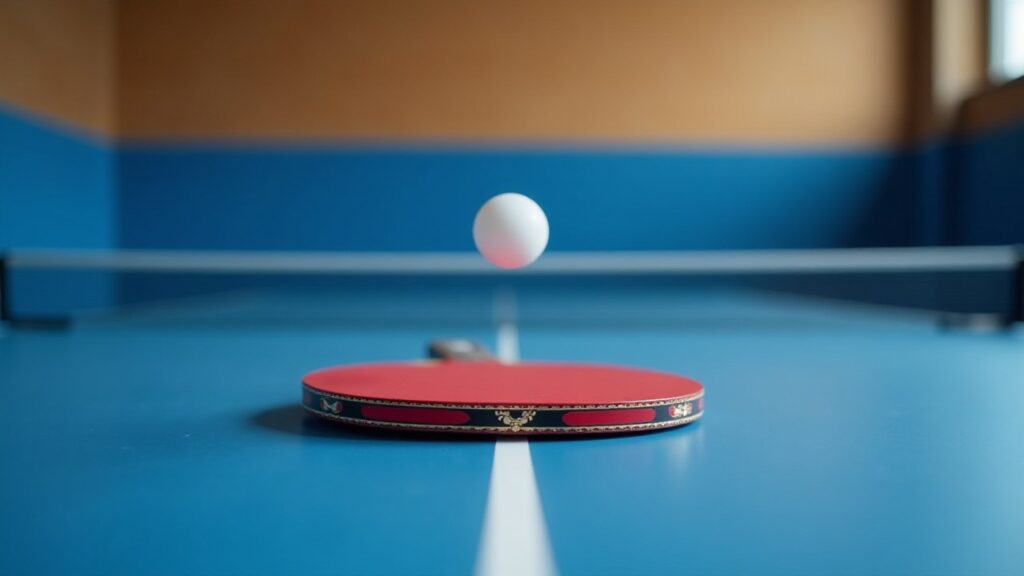
To serve in ping pong, you rest the ball freely on the open palm of your free hand, keep that hand still, toss the ball almost straight up so it climbs at least 16cm, and hit it on the way down. The ball must bounce once on your side of the table and then go directly to your opponent’s side. Until you hit it, the ball has to stay above table height and behind your end line, and your opponent must be able to see it.
Those requirements come from the Laws of Table Tennis, which the International Table Tennis Federation (ITTF) publishes in its Statutes. Below, each part of the serve is set out in order, followed by the doubles version, the serving rotation and what happens when a serve goes wrong.
The Table Tennis Serve Rules, Step by Step
The ITTF Laws describe the service as a sequence of requirements. Taken one at a time, they form a simple checklist.
1. Start with the ball on an open palm
At the start of the serve, the ball must rest freely on an open palm. The palm belongs to your free hand, which the Laws define as the hand not holding the racket. That hand has to be stationary when the serve begins.
2. Toss the ball near vertically
Next, you send the ball upward, close to vertical, and you must not put any spin on it as you release it. Once it leaves your palm, the ball needs to climb a minimum of 16cm. On its way back down, nothing may touch it before your racket does.
3. Strike the ball as it falls
The Laws say the server hits the ball while it is falling.
4. Keep the ball above the table and behind the end line
For the whole serve, from the starting position until contact, the ball has to stay higher than the playing surface and farther back than your end line. Under the Laws, the end line counts as running on endlessly in both directions.
5. Do not hide the ball
Neither you nor your doubles partner may block the receiver’s view of the ball, and the same goes for clothing or anything else either of you is wearing or carrying. There is a second requirement too. Right after the toss, your free arm and hand must leave the zone separating the ball from the net. The Laws mark out that zone using three things: the ball, the net, and the net’s imaginary extension straight upward.
6. Make the ball bounce on both sides
With your racket contact, the ball must land on your own court first. After that it has to reach the receiver’s court directly.
Serving in Singles vs Doubles
The six steps above apply in both singles and doubles.
Doubles adds a placement rule. The serve must touch the server’s right half court and then the receiver’s right half court, one after the other. A white centre line, 3mm wide, divides each court into halves for doubles, and the Laws treat that line as belonging to each right half court.
Doubles also follows a rotation. Each time the service changes hands, the player who had been receiving takes over as server, and the partner of the player who had been serving becomes the new receiver.
How Often Each Player Serves
Under the Laws, service switches to the other side every time 2 points have been played. This pattern runs to the end of the game, with two exceptions:
- The score reaches 10-10, or
- The expedite system has started.
In both situations, the order of servers does not change, but players switch after every single point instead of every two. In addition, whoever served first in one game receives first in the following game.
What Happens If the Serve Touches the Net?
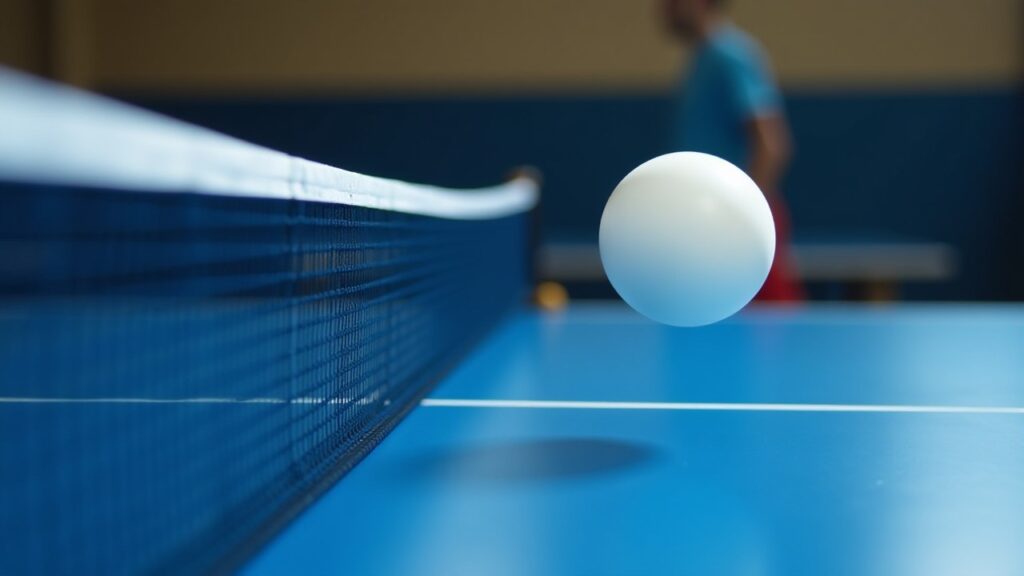
A serve that touches the net assembly is a let as long as nothing else about it is wrong. A let means the rally does not count toward the score, so the serve is taken again. The net assembly means the net plus everything holding it up, including the posts and their clamps.
A let is also called when the server serves before the receiver is ready, provided the receiver makes no attempt to hit the ball. A serve that brushes the net and also breaks a different requirement is not a let. Failing to make a correct service gives the opponent a point under the Laws.
Faults, Warnings and the Umpire’s Role
According to the Laws, it is up to the server to serve in a way that allows the umpire or assistant umpire to be satisfied the serve is legal. Either official has the power to rule a serve incorrect.
The Laws include one allowance. When an official has doubts about whether a serve is legal, they can stop play and give the server a warning, but only once in a match. From then on, if that player, or that player’s doubles partner, makes a serve that is not clearly legal, it counts as incorrect and the opponent wins the point.
There is also an exception for physical disability. The umpire may relax the serving requirements when satisfied that a disability prevents a player from meeting them.
Who Serves First?
The first server is not fixed in advance. Under the Laws, a draw decides who gets to choose. The winner of the draw may elect to serve first, receive first, or begin at a chosen end of the table, and the other side then takes the remaining choice.
In doubles, the pair with the right to serve first in a game decides which of its two players will serve. For the opening game of a match, the pair receiving decides which of its players will receive first.
Frequently Asked Questions
How high do you have to toss the ball when serving?
The ITTF Laws require a toss that is close to vertical, has no spin, and rises 16cm or more after leaving your palm. The ball must then drop without touching anything until you hit it.
Can you serve from anywhere on your side of the table?
Until contact, the ball has to be above the playing surface and behind your end line. In doubles, the serve must also travel from your right half court to the receiver’s right half court.
Is a serve that hits the net a point?
Not if the rest of the serve is correct. In that case the rally is a let and the serve is replayed. If the serve touches the net and also breaks another requirement, the receiver wins the point.