History and Origin of Table Tennis: From Parlour Game to Olympic Sport
Table tennis began in England in the late 19th century as an indoor version of lawn tennis. Trace its path from improvised parlour game to the Olympics.
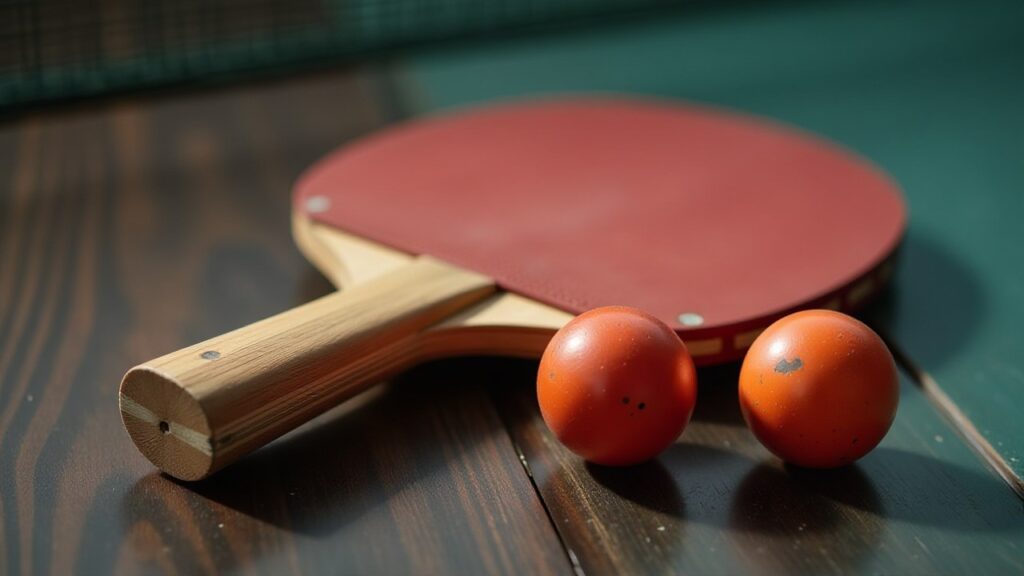
Table tennis most likely began in England in the late 1800s as a social pastime, played on a table with makeshift equipment. The history that the International Table Tennis Federation (ITTF) publishes places its development in the years after lawn tennis caught on during the 1880s, and says the game only took off around 1900, when the celluloid ball was introduced. The ITTF itself was founded in 1926, and table tennis joined the Olympic programme in 1988.
The sections below follow that path, from early patents and parlour games to the world governing body and the Olympic Games.
The Origin of Table Tennis in 19th-Century England
The ITTF links table tennis to badminton and lawn tennis, and traces all three back to the much older game of real tennis. In the 1880s, according to the ITTF timeline, people adapted lawn tennis to the dining table using whatever equipment they could improvise.
Patents and products followed. The ITTF history lists several early steps:
- 1883: an English patent covering improved nets for games referred to a version of tennis played indoors on a billiard or dining table.
- 1885: an English inventor applied for a patent for a game called “Table Tennis”. By 1887 the application was listed as abandoned, and the ITTF says no evidence has been found that the game was ever produced.
- 1887: a board and dice game called “Table Tennis” appeared in the United States. The ITTF calls it the earliest production use of the name.
- 1890: a set of parlour table games patented in England contained the oldest surviving action game of table tennis. It came with strung rackets and a 30mm rubber ball covered in cloth.
Over the same period, manufacturers tested many other indoor versions of lawn tennis, including board games, card games and games played with balloons.
An Early Game and the Problem With the Ball
In 1891, a London game maker released its own version of tennis on a table. The ITTF Museum describes the set as having drum-style rackets taken from the shuttlecock game, a 50mm cork ball wrapped in webbing, and a net 30cm high. Only two examples are known to survive.
These early action games did not succeed. The ITTF history blames the balls: rubber bounced too wildly, and cork bounced too little.
The Celluloid Ball Arrives
Around 1900, celluloid balls began taking over from rubber and cork balls. The ITTF timeline credits the celluloid ball with the ideal bounce, and says the game then became a huge success.
The ITTF also connects the new ball to a new name. A researcher traced the words Ping Pong to a song from 1884, and the sound of the celluloid ball striking the drum-style rackets led people to use that name for the game. The London game maker added Ping Pong to the title of its own set and later dropped its original name.
The game was sold under many other titles too, among them Whiff Waff, Pom-Pom, Netto, Clip-Clap and Tennis de Salon. Over time, Ping Pong and Table Tennis became the two leading names.
Rival Associations and a Trademark
The two competing names caused confusion. In 1901, England had a Table Tennis Association and a rival Ping Pong Association, and the two followed different rules. They merged in 1903.
The ITTF history also covers the trademark. A company in England registered Ping Pong as a trademark in 1900 and soon joined forces with the London game maker. The two companies enforced the trademark strictly, insisting that only their branded equipment be used at ping pong tournaments and clubs. An American company that acquired the US rights to the name enforced it in the same way. According to the ITTF, it eventually became clear that the sport could only move forward once these commercial ties were cut.
The ITTF timeline lists two more developments from around 1901: the first books about the game appeared in England, and the game reached China through western settlements and trade missions.
Decline, Revival and the Birth of the ITTF
The first boom was short. The ITTF timeline says the ping pong craze had faded by 1904, although the game kept some pockets of popularity in eastern Europe.
A revival followed in 1922 in England and Europe, and England set up standard laws for the game that year. In 1926, the International Table Tennis Federation was started in Berlin. In the same year, London staged the first World Championships, and the new federation adopted its constitution and its first standardised Laws. The ITTF Statutes also give 1926 as the founding year.
Key Changes in the Modern Game
The ITTF timeline records a series of later milestones:
- 1939: Cairo, Egypt, hosted the first World Championships held outside Europe.
- 1952: Bombay, India, hosted the first World Championships staged in Asia.
- 1957: the World Championships switched to a two-year cycle.
- 1959: laws standardising the racket were enacted.
- 1960: table tennis was part of the first Paralympic Games, held in Rome.
- 2000: after the Sydney Olympics, the ball grew to 40mm for better television viewing.
- 2001: games changed from 21 points to 11 points.
- 2016: the World Championships and the Olympics used plastic balls.
The Road to the Olympic Games
The ITTF timeline says the federation received formal recognition from the International Olympic Committee (IOC) in 1977.
According to the IOC’s Olympic Studies Centre, the 84th IOC Session, held in Baden-Baden in 1981, decided to include table tennis at the Seoul Games of 1988. Seoul then hosted the sport’s Olympic debut, with two events for men and two for women.
The Olympic programme has changed since. The IOC records that its Executive Board accepted an ITTF request in 2005 to swap the doubles events for team events, starting at the Beijing Games of 2008. In 2017, the Executive Board approved a mixed doubles event for the Tokyo Games.
Frequently Asked Questions
Where did table tennis originate?
According to the ITTF, table tennis likely began in England in the late 1800s, using makeshift equipment, and it developed after lawn tennis grew popular in the 1880s.
When was the ITTF founded?
The International Table Tennis Federation was founded in 1926. The ITTF history says it was started in Berlin that year, and London hosted the first World Championships.
When did table tennis become an Olympic sport?
The IOC decided in 1981 to add table tennis to the Olympic programme, and the sport made its Olympic debut at the Seoul Games in 1988.