Custodial vs Non-Custodial Crypto Card: Who Holds Your Crypto Before You Pay
Custodial vs non-custodial crypto card: the difference is who controls your crypto until you pay. Here is how each works and what risks you take on.
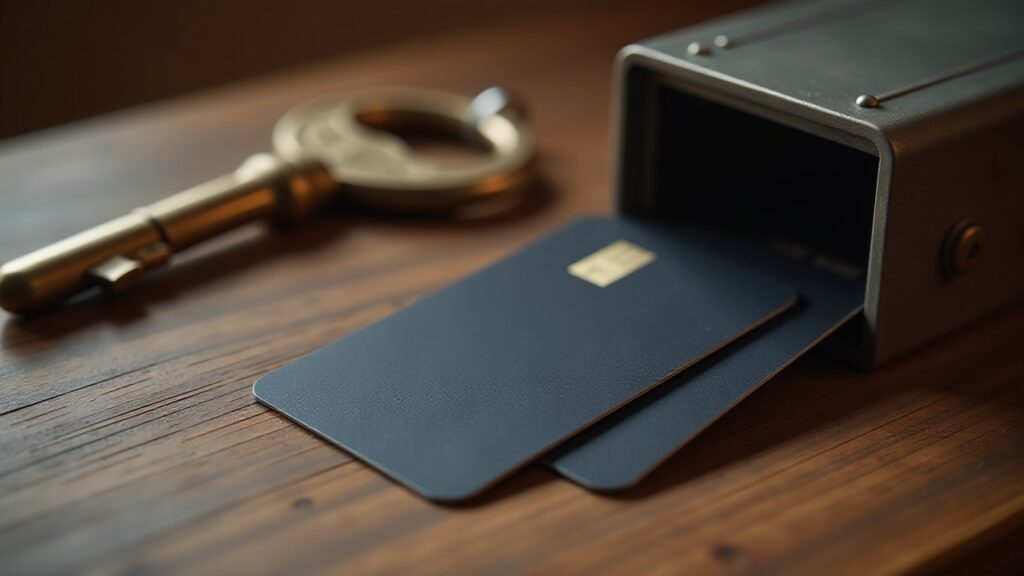
The difference between a custodial and a non-custodial crypto card is who controls your crypto before you spend it. With a custodial card, a company such as an exchange holds your crypto and its private keys, and the card spends from that account. With a non-custodial card, sometimes called self-custodial, the crypto stays in a wallet that you control until the moment you pay.
Both kinds look the same at the till. The difference shows up in who you are trusting, what you are responsible for, and what happens if something goes wrong.
First, What Custody Means
FINRA explains crypto custody in its investor guidance. Crypto assets are entries on a blockchain ledger, and they are controlled by pairs of keys: a public key and a private key. FINRA describes the private key as working much like a personal password, so keeping crypto safe comes down mostly to keeping the private keys safe. A software or hardware wallet is simply a way of storing those keys.
FINRA then describes two ways to hold them:
- Self-custody: you hold the private keys yourself and look after them.
- Using a custodian: a service provider stores the private keys on your behalf.
A custodial crypto card is built on third-party custody. A non-custodial card is built on self-custody.
How a Custodial Crypto Card Works
Cards from exchanges such as Coinbase and Crypto.com work this way. You keep a balance in your account at the company, and the card draws on that balance.
Coinbase’s card draws on a linked Coinbase account, and its cardholder agreement, on file with the CFPB with an effective date of September 2022, says your chosen spending currency is converted to US dollars at the trading rate on Coinbase’s platform. Crypto.com describes its card as a prepaid card that you top up from your Crypto.com crypto wallet, cash account or another card. In both cases, the crypto sits with the company until you spend it or move it elsewhere.
What this means for you:
- Less to manage. You do not handle private keys or recovery phrases for the card balance. You sign in to an app instead.
- You depend on the company. FINRA notes that online wallets run by crypto exchanges are common targets of cyberattacks, and that some crypto service providers protect against theft better than others.
- Its oversight matters. FINRA warns that some crypto service providers operate with limited regulatory oversight, or none, and may not follow the same investor protection rules as regulated firms. It suggests vetting any provider carefully before using it.
How a Non-Custodial Crypto Card Works
A non-custodial card connects to a wallet you control. The card provider does not hold your crypto in advance. Instead, the amount needed is taken from your wallet at the moment of payment.
MetaMask describes its card this way. Its card page says your funds remain under your own control in your wallet until the instant you pay, and that the card works from the private keys of your own MetaMask wallet, as of October 2026. Gnosis Pay, which provides card infrastructure, describes its cards as self-custodial, with users keeping control of their funds through Safe smart accounts.
What this means for you:
- You keep control. Your crypto is not sitting in a company’s account between purchases.
- You carry the responsibility. With self-custody, looking after the keys is your job. FINRA points out that devices that hold keys can break, be lost or be stolen, and gives the example that losing a phone with a wallet app on it may mean losing the crypto for good.
- Backups matter. FINRA lists writing keys down on paper among the offline ways to store them. Whatever backup you keep, store it somewhere safe and never share it, because the private key works like the password to your crypto.
Even with a non-custodial card, the card issuer, the card network and a payment processor are still involved in the actual payment. Self-custody covers the crypto before you pay, not the whole card system.
Side-by-Side Comparison
| Point | Custodial card | Non-custodial card |
|---|---|---|
| Who controls the private keys | The company | You |
| Where the crypto sits before you pay | In your account at the company | In your own wallet |
| Main risk to think about | The company is hacked or poorly overseen | Your keys or device are lost, stolen or hacked |
| What you must protect | Your account login and security codes | Your wallet, private keys and recovery phrase |
Questions to Ask Before Choosing
A few questions help when you compare a custodial card with a self-custodial one:
- Who holds the private keys before you pay, the company or you?
- Is the company behind the card regulated, and where? FINRA advises checking a provider carefully before you use it.
- Does the provider keep keys in internet-connected “hot” wallets, offline “cold” storage or both? FINRA describes hot wallets as convenient but exposed to hackers, and cold storage as safer from hacking but open to loss or damage.
- If you hold the keys yourself, are you comfortable setting up a wallet and keeping a safe backup?
- What fees apply to spending and to moving your crypto in or out?
Then check the card’s own details. MetaMask, for example, lists the tokens and networks its card can spend from, and lets you set daily, weekly or monthly spending limits in its app.
A Note on Safety Habits
Whichever type you choose, a few habits help. Keep your private keys and any backup to yourself. Be wary of anyone who asks you to move your wallet to a new service: FINRA warns that fraudsters set up fake crypto service providers and pose as tech support for real ones. FINRA also notes that stolen crypto is rarely recovered. Strong passwords and multi-factor authentication protect the app side of either card.
Our crypto cards list notes which cards are self-custodial. The MetaMask Card and Gnosis Pay summaries show how self-custodial cards are described. Check each issuer’s page for current terms.
Questions and Answers
Is a non-custodial crypto card safer? Not automatically. It removes the risk of a company losing your crypto, but it adds the risk of you losing your keys or recovery phrase. Which risk is smaller depends on your own habits.
Does a non-custodial card still need identity checks? It can. Self-custody covers the crypto, not the card account. Gnosis Pay, for example, lists KYC/AML verification among the features of its card platform.
Can I move between the two types? Yes. You can hold some crypto with an exchange and some in your own wallet, and use a card for each.
This article is for information only and is not financial advice.