Shuttle in Badminton: How the Shuttlecock Is Built, Weighed and Tested
The shuttle in badminton has 16 feathers, a 25-28 mm base and weighs 4.74-5.50 g. See how the BWF Laws define the shuttlecock and test its speed.
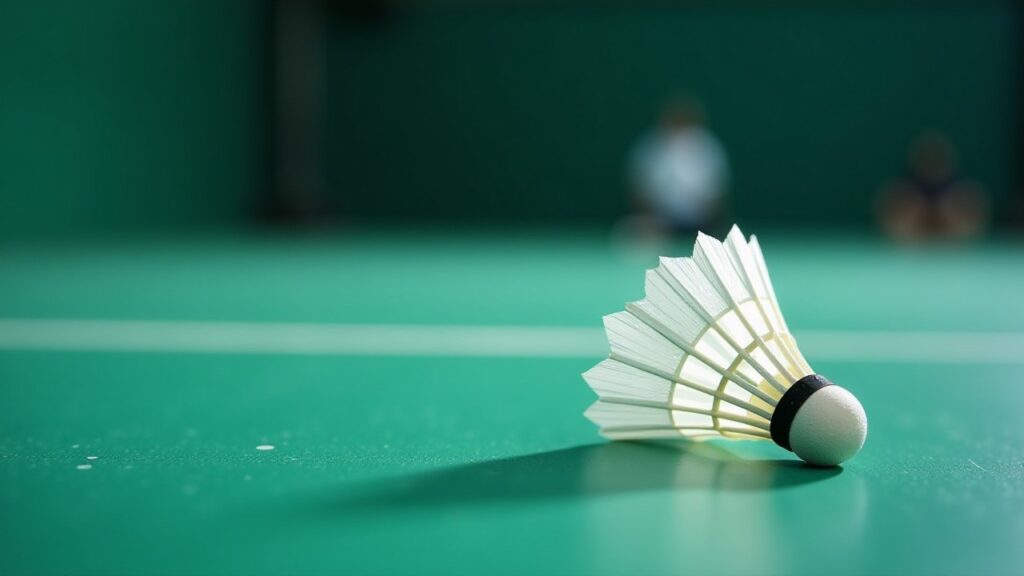
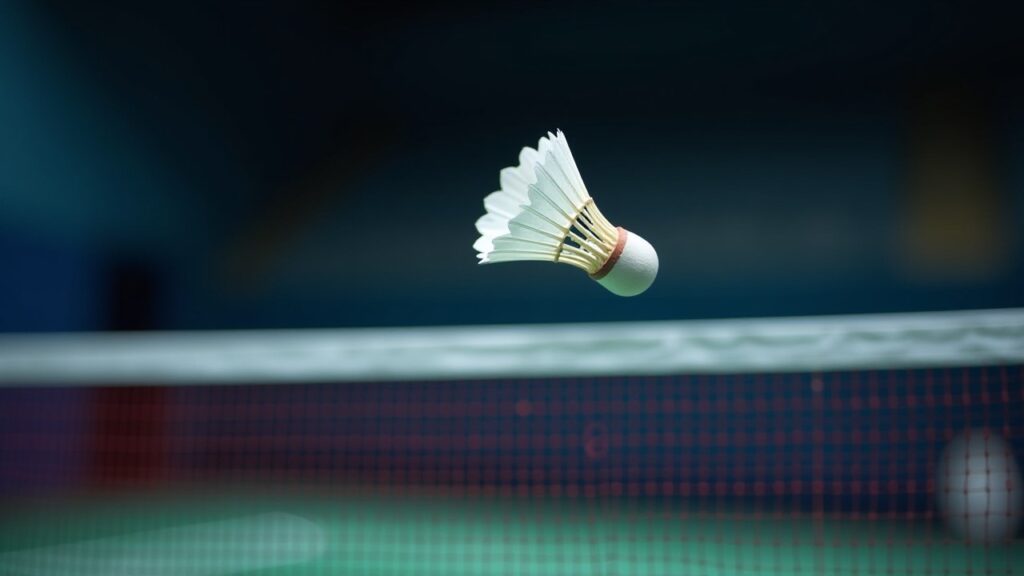
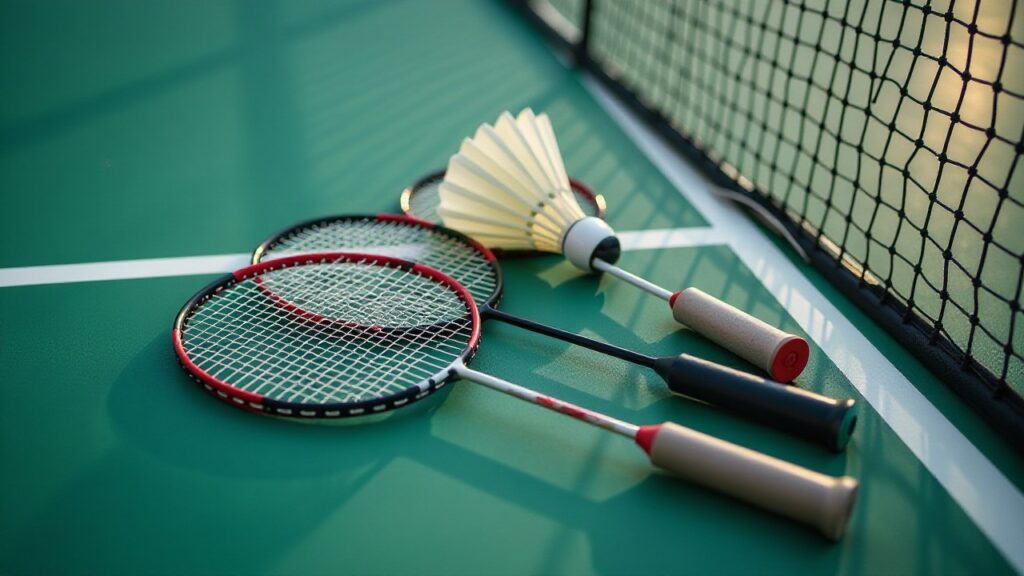
The shuttle in badminton is the object players strike back and forth over the net. The Laws of Badminton from the Badminton World Federation (BWF) call it the shuttle, while BWF equipment documents, such as its certification programme, use the term shuttlecock. Under Law 2, a feathered shuttle carries 16 feathers set into a rounded base, and its weight must fall between 4.74 and 5.50 grams.
Synthetic versions are also permitted by the Laws. This guide covers how the Laws describe the construction of a shuttle, how its speed is checked on court, how the BWF certifies shuttlecocks, and where the shuttle appears in the playing rules.
What the BWF Laws Say a Shuttlecock Must Be
Law 2 of the Laws of Badminton deals with the shuttle. It permits natural materials, synthetic materials, or a combination of the two. The benchmark is a natural feathered shuttle built on a cork base with a thin leather covering: whatever a shuttle is made from, Law 2 expects its flight characteristics to be broadly similar to that model.
Feathered shuttle specifications
For a feathered shuttle, Law 2 lists these requirements:
- The base holds 16 feathers.
- All feathers share one length, somewhere between 62 mm and 70 mm. The measurement runs from each feather’s tip down to the top of the base.
- Measured across the open end, the feather tips form a circle whose diameter is between 58 mm and 68 mm.
- Thread or another suitable material holds the feathers firmly in place.
- The base measures 25 mm to 28 mm across, with a rounded underside.
- Total weight is between 4.74 and 5.50 grams.
Non-feathered (synthetic) shuttles
Law 2 also covers the non-feathered shuttle. In this version, a skirt made of synthetic material, or some other synthetic imitation of feathers, stands in for natural feathers. The base follows the same 25 mm to 28 mm rule as the feathered type. Feather length, tip circle and weight use the feathered figures as their reference.
There is one allowance. The Laws recognise that synthetic materials differ from feathers in specific gravity and other properties, so for these measurements and the weight they accept a variation of no more than 10 per cent.
Adjusting for Altitude and Climate
Law 2 acknowledges that altitude or climate can leave the standard shuttle unsuitable in some places. In those locations, the specifications may be modified, provided the Member Association concerned approves the change. Law 2 attaches a condition: any such modification must leave the shuttle’s overall design, speed and flight unchanged.
How a Shuttle Is Tested for Speed
Law 3 sets out a speed test that can be run on court. It works like this:
- A player stands at one end and strikes the shuttle with a full underhand stroke, meeting it above the back boundary line.
- The stroke sends the shuttle upward, travelling parallel to the side lines.
- The tester then checks where it comes down at the opposite end.
Law 3 gives the target zone. For a correctly paced shuttle, the landing point is at least 530 mm and at most 990 mm before the far back boundary line. Diagram B shows optional testing marks that can be placed on the court around this zone.
How the BWF Certifies Shuttlecocks
Alongside the Laws, the BWF runs an Equipment Certification Programme for shuttlecocks. The BWF overview document for this programme gives the following details:
- The scheme dates from 1988.
- It looks at two things: whether a shuttlecock meets the relevant Laws of Badminton, and whether its design and technical properties create any likely safety hazards.
- Testing is carried out by a BWF accredited laboratory and by international players.
- Besides compliance with the Laws, the test areas include base surface roughness, tumbling stability, flight deviation and trajectory.
- A certified brand and grade may show a BWF approval statement for international play on its packaging.
The same document says the BWF may also test samples taken from tournaments, and approval can be withdrawn if those samples fail.
How the Shuttle Shapes the Rules of Play
The shuttle is not only an equipment topic. Several playing rules in the Laws depend on how it is struck or how it behaves.
At the service
Law 9 covers the service. The server has to let go of the shuttle without putting spin on it, and the racket’s first contact must be with the base. At the moment of contact, Law 9 also requires every part of the shuttle to sit lower than 1.15 metres above the court surface.
During a rally
Law 15 explains when the shuttle stops being in play. That happens once it lands on the court surface, once a fault or let has been called, or once it hits the net or a post and begins dropping on the hitter’s side of the net. Law 13 lists shuttle-related faults during play. Among them are a player catching the shuttle on the racket, holding it and then slinging it during a stroke, and the same player hitting it twice in a row.
When a shuttle breaks
Under Law 14, it is a let if the shuttle falls apart during play so that the base comes away completely from the rest of it. After a let, nothing played since the last service counts, and the service is taken again by whoever served last.
Tampering is not allowed
Law 16 forbids a player from deliberately damaging or altering the shuttle to change how fast it travels or how it flies. This is listed under misconduct in Law 16. The umpire may respond to a breach with a warning or by faulting the offending side.
Frequently Asked Questions
How many feathers does a badminton shuttlecock have?
Law 2 requires 16 feathers in the base of a feathered shuttle. Every feather has the same length, which must be between 62 mm and 70 mm when measured from tip to the top of the base.
How much does a badminton shuttle weigh?
The Laws set the weight at 4.74 to 5.50 grams. A synthetic shuttle uses the same weight rule, with up to 10 per cent variation allowed because its materials differ from feathers.
How do you check if a shuttle has the right speed?
Strike it with a full underhand stroke from above the back boundary line, sending it upward and parallel to the side lines. A correctly paced shuttle comes down between 530 mm and 990 mm before the opposite back boundary line.