How Many Soccer Players on the Field? Team Size and Positions Explained
Each soccer team has up to eleven players on the field, one of them a goalkeeper, so a full match has 22. Here is how team size and positions work.
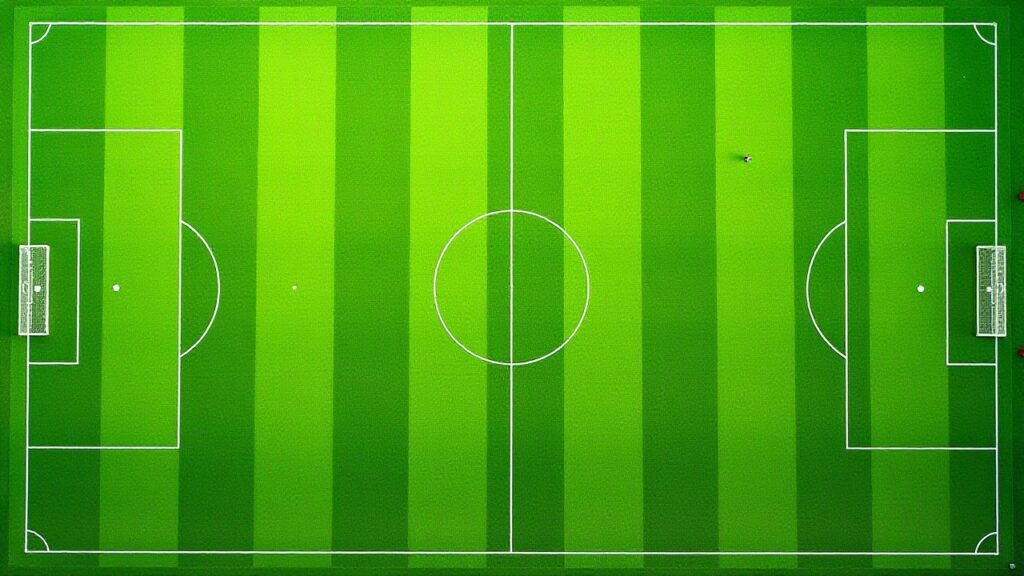
Under the Laws of the Game, each team can have no more than eleven players on the field, and one of those players has to be the goalkeeper. When both teams are at full strength, that makes 22 players on the field together. A side with fewer than seven players cannot begin a match, and a match cannot go on once a side drops below seven.
These numbers come from Law 3, part of the Laws of the Game written by The IFAB. The rest of this guide covers how the numbers work during a match, what the Laws say about the goalkeeper, and how The FA’s coaching material describes the other roles.
How Many Soccer Players on the Field: What Law 3 Says
Law 3 starts with the basic picture: a match involves two teams, each limited to eleven players, with a goalkeeper among them.
The minimum of seven
Seven is the lowest number a team may have. Below that, the referee cannot start the match, and a match already under way cannot go on.
Law 3 also covers what happens next. In principle, a team that causes a match to stop or be abandoned because it is down to fewer than seven players forfeits that match. This is subject to the regulations of the competition concerned.
Substitutes
Teams can swap players during a match, following the procedure in Law 3. The main steps are:
- The substitutes have to be named before kick-off.
- A substitute comes on only when play has stopped and the referee has given a signal.
- The substitute enters at the halfway line, once the player being replaced has left.
- The player going off normally exits at the closest point of the boundary line, unless the referee lets them go off at the halfway line or elsewhere.
- Once replaced, a player heads straight to the dressing room or technical area and takes no more part, unless return substitutions are allowed.
Outside official competitions, and apart from senior ‘A’ international matches, which have their own limits, Law 3 allows more substitutes if the teams agree a maximum number and the referee is told before the match.
Team officials
Law 3 calls the coach and the other people on the team list team officials, provided they are not listed as players or substitutes. Anyone missing from the team list in all of those roles counts as an outside agent.
The Goalkeeper: The Position the Laws Name
The goalkeeper is the one role that the Laws single out.
Handling the ball
Law 12 lets the goalkeeper handle the ball inside their own penalty area. Outside this privilege, handling the ball can be an offence under Law 12. Once outside the penalty area, the goalkeeper has the same handling limits as any other player.
Even inside the area there are limits. A goalkeeper may not handle the ball after a team-mate has deliberately kicked it to them, or after receiving it straight from a team-mate’s throw-in. In those cases, the opponents get an indirect free kick.
Colours
Law 4 requires each goalkeeper to wear colours that can be told apart from those of the other players and the match officials.
Swapping with the goalkeeper
Any player may change places with the goalkeeper. The referee has to be told first, and the switch has to happen while play is stopped.
Soccer Positions in Coaching
Apart from the goalkeeper, the Laws do not name positions. Coaching material from The FA and England Football uses names such as centre-backs, full-backs, midfielders, wingers and striker, and describes what players in different roles do.
Defenders
One England Football article says that, for a defender, skilful play is more likely to be “a well-timed interception or tackle”.
The FA’s coaching advice on central defenders lists several decisions they face, such as “when to press an opponent or drop off”. It also describes them protecting “the area between the defence and midfield” and dealing with “the space behind”. The same advice asks central defenders to “read the game and get into positions early” and to organise the players in front of them.
Midfielders
For a midfielder, the same England Football article gives the example of “a quick turn and dribble past an opponent to put their team on the front foot”.
In England Football’s guide to defending as a team, a central midfielder presses the ball when they are the player closest to the opponent who has it.
Wide forwards and other attackers
The defending guide also describes the nearest wide forward sprinting at the ball to pressure the opponents. In England Football’s position-specific passing practice, the two wingers always stay outside the marked area, and one striker occupies the end zone.
Defending together
The defending guide explains that while one player presses, team-mates give covering support behind them. Others provide balance away from the ball and keep the team’s shape compact.
Trying Different Positions
England Football encourages young players to experience more than one position. Its article notes that “skilful play takes place across the pitch” and changes from one position to another. It also suggests that goalkeepers who play outfield in training can build their ability on the ball.
Frequently Asked Questions
How many players are on a soccer team during a match?
Law 3 allows each team a maximum of eleven players on the field, and one of them must be the goalkeeper. With both teams complete, there are 22 players on the field.
What is the minimum number of players needed to play?
Seven. Law 3 does not let a match begin or carry on when a team has fewer players than that.
Do the Laws of the Game define positions like defender or striker?
No. The goalkeeper is the only position that the Laws name and give special rules to. Names such as centre-back, full-back, midfielder, winger and striker come from coaching material such as that published by The FA and England Football.